

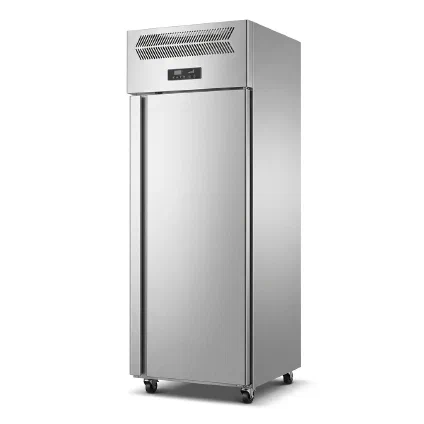
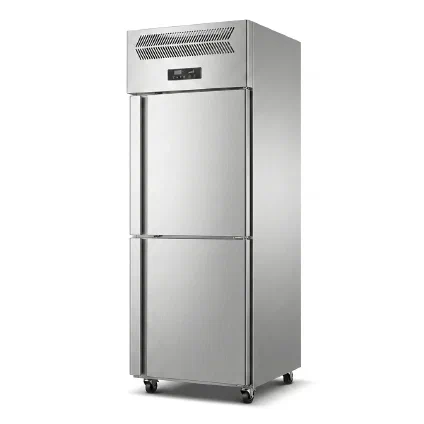
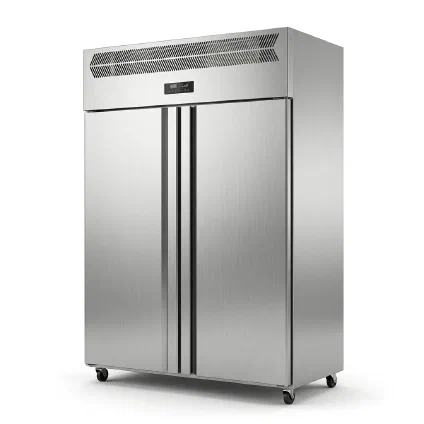
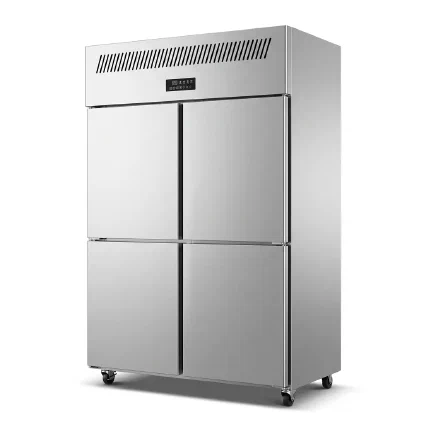
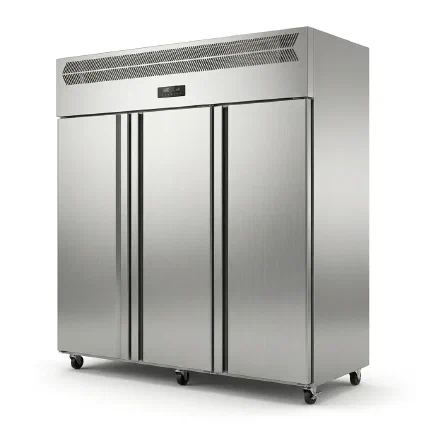
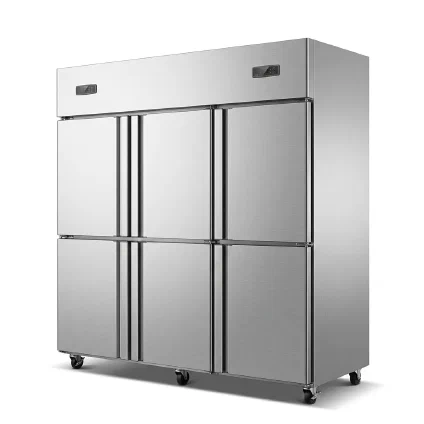
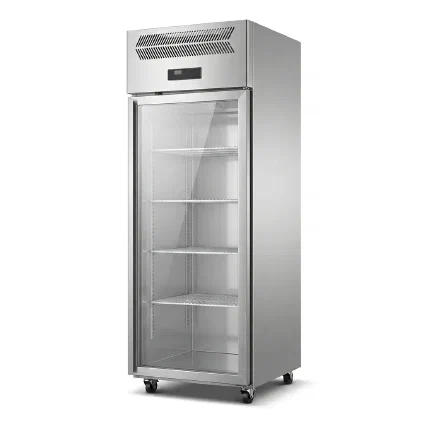
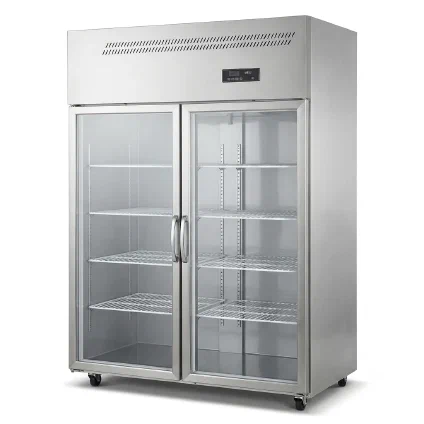
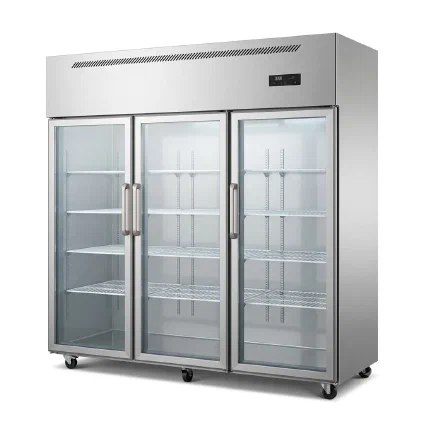
Commercial kitchens require equipment that can operate reliably every day. Upright refrigerators are often selected because they combine durability, food safety, and practical storage capacity.
These refrigerators are commonly used by restaurants, hotels, bakeries, central kitchens, catering companies, hospitals, schools, and food processing facilities. Unlike display refrigerators, their primary purpose is efficient food storage and easy kitchen operation. Ingredients remain organized, protected, and readily available during busy working hours.
Whether to choose direct cooling or air cooling. Direct cooling systems are often valued for their simple structure and lower energy consumption. Dynamic cooling systems provide more uniform temperature distribution and faster recovery after door openings.
Material selection is another important topic. About the difference between 201 and 304 stainless steel. Both materials are widely used in commercial refrigeration. For standard kitchen applications, 201 stainless steel offers a cost-effective solution. For environments with higher humidity or stricter hygiene requirements, 304 stainless steel is often preferred because of its stronger corrosion resistance.
Commercial refrigerators operate continuously throughout the day. Thick insulation helps reduce cold air loss and improves energy efficiency. A 60 mm insulation layer can help maintain stable internal temperatures while reducing compressor workload.
For flexible storage solutions. Dual-temperature models can combine refrigeration and freezing functions in one cabinet. This helps save kitchen space and improves operational convenience. Adjustable shelves and customized internal layouts can further improve storage efficiency.
In many international markets, buyers compare Reach-in refrigerators based on durability, cooling performance, and maintenance costs. Others may refer to these products as solid door fridges because of their enclosed cabinet design and focus on storage rather than display. In Europe, the term stainless steel refrigerators is also commonly used to describe commercial stainless steel refrigeration equipment.
For wholesalers and kitchen equipment suppliers, choosing a well-built refrigerator means fewer service issues, longer equipment life, and greater customer satisfaction. Reliable components, quality insulation, and durable stainless steel construction remain the key factors behind long-term commercial performance.