
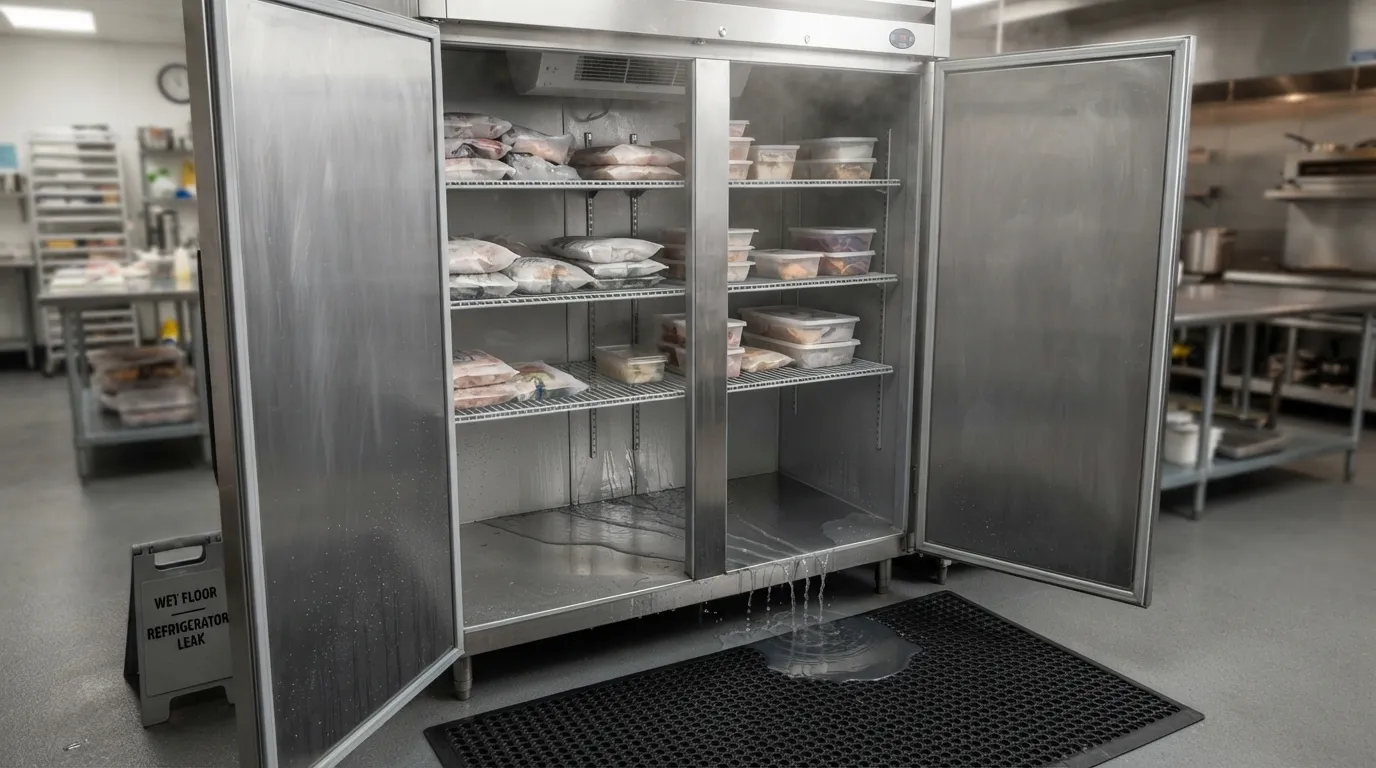
 Water leaking from a commercial refrigerator or freezer
is more than a maintenance inconvenience. In a restaurant, supermarket, convenience store, or food-service operation, standing water can create slip hazards, damage flooring, interrupt daily operations, and indicate a refrigeration or defrosting problem that may eventually affect food temperature.
Water leaking from a commercial refrigerator or freezer
is more than a maintenance inconvenience. In a restaurant, supermarket, convenience store, or food-service operation, standing water can create slip hazards, damage flooring, interrupt daily operations, and indicate a refrigeration or defrosting problem that may eventually affect food temperature.
For equipment buyers, however, the more important question is not simply “How do I stop the leak?” It is “Why did the cabinet produce this water, and is the equipment design suitable for the application?”
Most commercial refrigerator and freezer water leaks are related to condensate drainage, defrost water, drain-pan problems, cabinet leveling, or warm humid air entering through the door gasket. Some problems are simple maintenance issues, while others indicate a fault in the defrost system , controls, refrigeration components, or cabinet design.
Where Is the Water Coming From? A Diagnostic Framework for Commercial Cabinets
Before replacing parts, identify where the water first appears. The location and timing of the leak often provide more useful information than the amount of water on the floor.
Water Pooling Inside the Cabinet Floor
When water collects on the bottom of a commercial refrigerator or freezer, the first component to inspect is normally the defrost drain.
During a defrost cycle, frost accumulated on the evaporator melts. The resulting condensate must flow into a drain pan and through the drain tube. If the drain is blocked or frozen, water can remain around the evaporator and eventually overflow into the storage compartment.
A secondary possibility is excessive evaporator icing. If the evaporator accumulates an abnormal amount of ice, the volume of meltwater during defrost can exceed the drainage system’s ability to handle it.
Water Under or Behind the Cabinet on the Floor
If water is found underneath or behind the cabinet rather than inside it, inspect the drain pan, drain tube, and evaporation system.
A drain pan may overflow because of excessive condensate, a blocked drain tube, incorrect positioning, physical damage, or a failed evaporation system. In some equipment designs, condensate is collected in a pan and evaporated using compressor heat, airflow, a heating element, or a combination of methods.
Cabinet leveling can also contribute. If a cabinet is installed on an uneven commercial floor and the pan or drainage path is not level, water may accumulate toward one side and spill over.
This is why adjustable leveling legs are not simply a cosmetic feature. Commercial refrigeration equipment is frequently installed on tiled, sloped, or uneven floors, moved during cleaning, or relocated during shop renovation.
Water or Condensation Around Door Frames and Front Panels
Water or heavy condensation around the door frame usually points toward warm, humid air infiltration.
The door gasket forms the primary air seal between the refrigerated compartment and the surrounding environment. If the gasket is torn, hardened, distorted, incorrectly installed, or no longer making continuous contact with the cabinet, warm air enters the refrigerated space.
That air carries moisture. When the moisture reaches cold surfaces, it condenses and may eventually freeze.
Frequent door opening can produce a similar effect, particularly in kitchens with high humidity. A refrigerator located next to cooking equipment, dishwashing areas, or other sources of steam can experience a substantially higher moisture load than a unit operating in a dry retail environment.
Water Appearing After Defrost Cycles
If water appears primarily after a defrost cycle, investigate the defrost and drainage system first.
A normal defrost cycle produces water. The problem occurs when that water cannot be contained and removed correctly.
Possible causes include:
Blocked drain opening
Frozen drain tube
Damaged or displaced drain pan
Defrost heater or sensor malfunction
Incorrect defrost timing
Excessive evaporator icing
Failed drain-pan evaporation system
Insufficient drainage capacity for the application
Root Causes of Commercial Refrigerator Freezer Water Leaks
Clogged or Frozen Defrost Drain
A commercial refrigeration system naturally produces condensate.
In a refrigerator, moisture from incoming air and products can condense on the evaporator. During defrost, this accumulated frost melts and should flow through the drain system.
Debris, food particles, dust, microbial buildup, and ice can restrict the drain. In a freezer, even a relatively small amount of residual water can freeze inside the drain tube and create a recurring blockage.
Maintenance is equally important. A drain that is technically well designed can still become blocked if it is never inspected.
Drain Pan and Evaporation System Failures
The drain pan is designed to collect water generated during defrosting. If the pan is cracked, deformed, incorrectly positioned, or unable to handle the condensate volume, water can reach the floor.
The evaporation system can create another failure point. Depending on the cabinet design, condensate may be evaporated using heat generated by the refrigeration system, forced airflow, or an electric heating element.
If an evaporation heater fails, or the evaporation capacity is insufficient for the operating environment, water can accumulate faster than it can be removed.
For commercial equipment, removable and inspectable drain pans are preferable because service technicians can identify contamination, corrosion, physical damage, or abnormal water accumulation without unnecessarily dismantling the cabinet.
Cabinet Leveling and Installation Issues
A commercial refrigerator can be mechanically sound and still develop a water leak because of poor installation.
An uneven floor can change the position of the drain pan and affect how condensate flows. In some cases, the water does not reach the intended drain outlet efficiently and instead accumulates on one side.
Adjustable leveling legs allow installers to compensate for uneven floors and maintain the intended cabinet position.
At commissioning, distributors or installers should verify:
The cabinet is stable and properly leveled.
All leveling legs are firmly supporting the cabinet.
The drain tube is not kinked or crushed.
The drain path has no unnecessary low points.
The cabinet has sufficient clearance for condenser airflow.
Doors close and seal correctly.
The equipment is not positioned directly beside excessive heat or steam sources.
These checks are particularly important after relocation, floor renovation, or equipment replacement.
Door Gasket Wear and Air Infiltration
A damaged door gasket can create much more than a small amount of condensation.
A poor seal allows warm air to enter continuously. This increases the moisture load on the evaporator, which can increase frost accumulation and force the refrigeration system to operate longer.
Typical signs of gasket failure include:
Visible splits or cracks
Hardened gasket material
Flattened sections
Gaps between gasket and cabinet
Door that does not close cleanly
Frost developing near the door opening
Condensation around the frame
For commercial applications, gasket replacement should be straightforward.
A relatively inexpensive gasket can prevent unnecessary compressor runtime, excessive frost accumulation, and premature refrigeration-system problems.
High Ambient Humidity and Operational Stress
Not every water problem indicates poor equipment quality.
A cabinet operating in a dry supermarket may experience very different conditions from the same cabinet installed in a busy commercial kitchen.
High humidity, frequent door opening, hot products, overloaded shelves, and inadequate ventilation can significantly increase the refrigeration load.
For example, a upright refrigerator located next to a cooking line may be exposed to hot, humid air every time the door opens. If the equipment is also frequently loaded with warm products, the refrigeration system must remove both sensible and latent heat.
This is where application matching becomes important.
Defrost System, Controls, and Refrigeration Component Faults
Repeated water leakage can indicate a problem deeper than a blocked drain.
Potential faults include:
Defrost timer failure
Defrost sensor malfunction
Defrost heater failure
Controller problems
Evaporator fan failure
Abnormal evaporator icing
Refrigeration-system faults
Incorrect refrigerant charge
Restricted refrigeration circuit
For example, an evaporator fan failure in a forced air-cooling cabinet can reduce air circulation and cause localized or excessive ice accumulation. When that ice eventually melts, the drainage system may be overloaded.
Refrigerant-related problems should not be diagnosed simply from the presence of water. A qualified refrigeration technician should evaluate the sealed system using appropriate pressure, temperature, and electrical measurements.
Cabinet Construction and Leveling Features
Water management is also influenced by basic cabinet construction.
Commercial equipment should be designed for environments where cleaning, movement, high traffic, and frequent door operation are normal.
For heavy-duty applications, buyers should evaluate:
Strength and adjustability of leveling legs
Drain accessibility
Bottom-panel construction
Corrosion resistance
Door-frame construction
Gasket retention
Insulation thickness
Service access
Condenser ventilation
Stainless steel construction where appropriate
For stainless steel freezers , buyers may also specify different grades depending on the application. 304 stainless steel is generally preferable where higher corrosion resistance is required, while 201 stainless steel may be selected where cost considerations are more important and the environment is less aggressive.
Material thickness should also be evaluated together with cabinet construction rather than treated as an isolated specification.
Prevention and Maintenance: Reducing Water Leak Risk in Commercial Operations
Staff Training and Daily Checks
The easiest commercial refrigeration problems to fix are usually the ones identified early.
Staff should know to report:
Water inside the cabinet
Water under the cabinet
Increasing frost
Unusual condensation
Doors that do not close properly
Temperature fluctuations
Unusual compressor or fan noise
Repeated alarm conditions
Door-opening discipline also matters. Leaving a refrigerator door partially open for several minutes can introduce a significant amount of warm, humid air.
Gaskets should be kept clean, particularly in food-service environments where grease and food residue can prevent a proper seal.
A simple daily inspection can identify a drainage or gasket problem before it becomes a refrigeration failure.
Scheduled Maintenance Checklist
The maintenance interval should depend on the operating environment.
A commercial refrigerator in a relatively clean retail store may require less frequent cleaning than equipment operating beside a cooking line.
A practical maintenance program should include:
Door gasket
Inspect for cracking and deformation.
Clean regularly.
Confirm continuous contact with the cabinet.
Condenser
Inspect for dust and grease accumulation.
Clean according to ambient conditions and equipment manufacturer recommendations.
Pay particular attention to kitchens with airborne grease.
Drain system
Inspect drain openings.
Check drain tubes for obstruction.
Look for standing water or repeated freezing.
Defrost system
Check abnormal frost accumulation.
Verify heater, sensor, timer, or controller operation when faults are suspected.
Cabinet leveling
Verify after relocation or major floor work.
Check that leveling legs remain firmly positioned.
Refrigeration performance
Monitor internal temperature.
Investigate abnormal compressor runtime or temperature fluctuations before they become major failures.
Environmental Controls
Equipment performance depends heavily on its installation environment.
In a high-humidity commercial kitchen, adequate HVAC and ventilation can reduce the moisture load placed on refrigeration equipment.
Cabinets should also have sufficient clearance around condenser air inlets and outlets. Restricting airflow can increase condensing temperature, reduce refrigeration efficiency, and increase compressor workload.
Product loading should follow the cabinet’s intended design. Overloading shelves, blocking evaporator airflow, or placing excessively warm products inside the cabinet can reduce temperature uniformity and increase operating stress.
When specifying equipment, consider the complete application:
Ambient temperature + humidity + door-opening frequency + product load + cabinet capacity + condenser ventilation
rather than evaluating only the advertised storage temperature .
Final Considerations for Commercial Refrigeration Buyers
A water leak should not always be treated as an isolated maintenance problem. In many cases, it is a visible symptom of how the cabinet manages condensate, defrosting, humidity, airflow, and temperature load.
When purchasing commercial refrigerators or freezers, professional buyers should evaluate more than cooling temperature and external dimensions.
Important questions include:
What ambient temperature is the cabinet designed for?
Is the compressor appropriately selected for the application?
Is the cabinet using static cooling or fan cooling?
How is defrost controlled?
How is condensate drained and evaporated?
Is the drain accessible for cleaning?
Is the drain protected against freezing where necessary?
Is the insulation sufficiently thick for the intended application?
How easily can the door gasket be replaced?
Are leveling legs robust enough for commercial floors?
Are drain pans, heaters, fans, gaskets, and controllers available as service parts?
Can the manufacturer support OEM specifications and replacement parts over the product’s service life?
For distributors and importers, these details can have a direct impact on after-sales costs and customer satisfaction.
A commercial refrigeration cabinet should not merely achieve the required temperature when it leaves the factory. It should be designed to maintain reliable temperature control, manage condensate, tolerate its intended operating environment, and remain serviceable throughout its working life.