
The recommended temperature setting depends on the type of food being stored, how the equipment is used, and the environment in which it operates.
In most cases, the usage of a commercial refrigerator or freezer is to keep food at a safe storage temperature while allowing the refrigeration system to operate efficiently.
Normal Temperature Settings
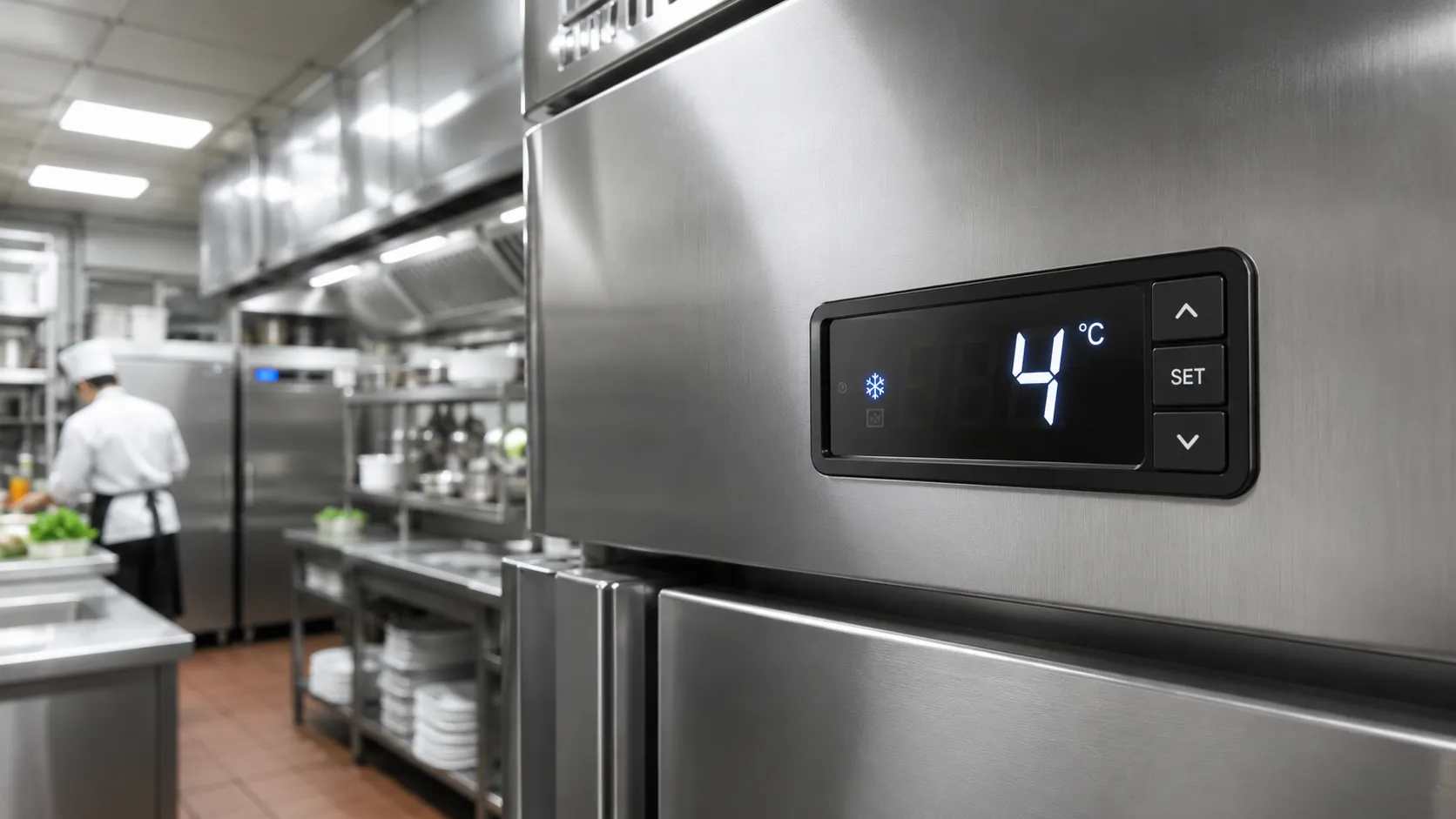 For general food storage, commercial refrigerators are typically set between 2°C and 5°C (36°F to 41°F).
Commercial freezers are usually set between -18°C and -22°C (0°F to -8°F). Frozen food is commonly stored at -18°C, while products such as ice cream often require lower temperatures to maintain their texture.
These temperature ranges are widely used in supermarkets, restaurants, convenience stores, and food service operations around the world.
Recommended Temperatures for Different Products
Not every product should be stored at the same temperature.
| Product | Recommended Temperature |
|---|---|
| Dairy products | 2°C to 4°C |
| Packaged meat | 0°C to 2°C |
| Fresh seafood | -1°C to 2°C |
| Fresh vegetables | 4°C to 6°C |
| Soft drinks | 3°C to 5°C |
| Cakes and pastries | 2°C to 8°C |
| Frozen food | -18°C |
| Ice cream | -22°C to -25°C |
| Gelato | -15°C to -18°C |
This is why two refrigerators in the same store may have different temperature settings. A beverage cooler and a fresh meat display cabinet are designed for different applications, even if they look similar from the outside.
Commercial Refrigerators
For most commercial refrigerators, 4°C is a practical starting point.
It keeps dairy products, beverages, prepared food, and many packaged products within their recommended storage range without placing unnecessary load on the refrigeration system.
Lower temperatures are not always better. Setting the controller too low may increase compressor running time and energy consumption. Some fresh produce can also suffer from chilling injury if stored below its recommended temperature.
If your products remain within the required storage range, there is usually no benefit in lowering the set point further.
Commercial Freezers
For commercial freezers, -18°C is the industry standard for storing frozen food.
This temperature is widely used throughout the cold chain because it helps maintain product quality while limiting bacterial activity.
Products such as ice cream are an exception. To keep the product firm and reduce ice crystal formation during storage, many ice cream freezers operate between -22°C and -25°C.
How to Choose the Right Setting
The first question should always be, “What products will the cabinet store?”
Once the required storage temperature is known, adjust the controller to maintain that temperature consistently.
As a general rule, choose the highest temperature that still meets the storage requirements of the product. This reduces compressor operating time, lowers energy consumption, and places less stress on the refrigeration system.
Ambient Temperature
The surrounding environment affects how hard the refrigeration system has to work, but it does not automatically change the required food storage temperature.
For example, a refrigerator installed in an air-conditioned supermarket may operate comfortably with a 4°C setting. The same cabinet installed in a busy kitchen with an ambient temperature above 35°C will have to reject much more heat, causing the compressor to run longer.
In most situations, it is unnecessary to lower the set point simply because the weather is hotter. Small maintenance measures , such as improving ventilation around the condenser, cleaning the condenser coils, and selecting equipment with the appropriate climate class are usually more effective solutions.
If product temperature cannot be maintained during periods of high ambient temperature, a small adjustment of 1–2°C may be appropriate after confirming that the refrigeration system is operating correctly.
Door Opening Frequency
Every time the door is opened, warm and humid air enters the cabinet.
In a restaurant kitchen, the door may only be opened occasionally. In a convenience store, customers may open the glass door hundreds of times each day.
Frequent door openings increase the refrigeration load and cause the cabinet temperature to recover more slowly.
Some operators choose to reduce the refrigerator set point slightly during peak business hours, particularly in summer. However, large temperature adjustments are rarely necessary. Maintaining good airflow inside the cabinet and avoiding prolonged door openings generally has a greater effect on temperature stability.
Why Is My Refrigerator Set to 4°C but the Food Temperature Is Different?
A common misunderstanding is that the temperature shown on the controller is the exact temperature of every product inside the cabinet.
In reality, the controller measures the air temperature at the location of its sensor. The temperature of the food itself changes more slowly and can vary depending on where it is placed.
For example, products stored near the evaporator are often colder than those on the top shelf or close to the door. A cabinet that has just been restocked with room-temperature products may also show a stable air temperature while the products are still cooling. References: Direct Cooling vs Dynamic Cooling.
Frequent door openings, blocked air vents, and heavy loading can create temporary temperature differences throughout the cabinet, even when the refrigeration system is operating normally.
For this reason, food safety should be based on the temperature of the stored products rather than the controller display alone. If accurate product temperature is critical, use a calibrated food thermometer to verify the temperature of the products instead of relying only on the cabinet’s air temperature reading.
A Few Things to Keep in Mind
The thermostat display shows the air temperature inside the cabinet, not necessarily the temperature of the food itself.
Product temperature is influenced by several factors, including air circulation, cabinet loading, ambient conditions, and how often the door is opened.
A refrigerator set to 4°C may still have areas that are slightly warmer or cooler. This is normal, especially in large cabinets or those using static cooling.
Rather than chasing the lowest possible temperature, focus on maintaining a stable storage environment that matches the products inside. Consistent temperatures, proper airflow, and regular maintenance contribute more to food quality than simply lowering the controller setting.