
Why Defrost Method Matters in Commercial Refrigeration Equipment
For commercial refrigerators and freezers , defrosting is not simply a maintenance function. It directly affects energy consumption, temperature stability, product quality, and long-term operating costs.
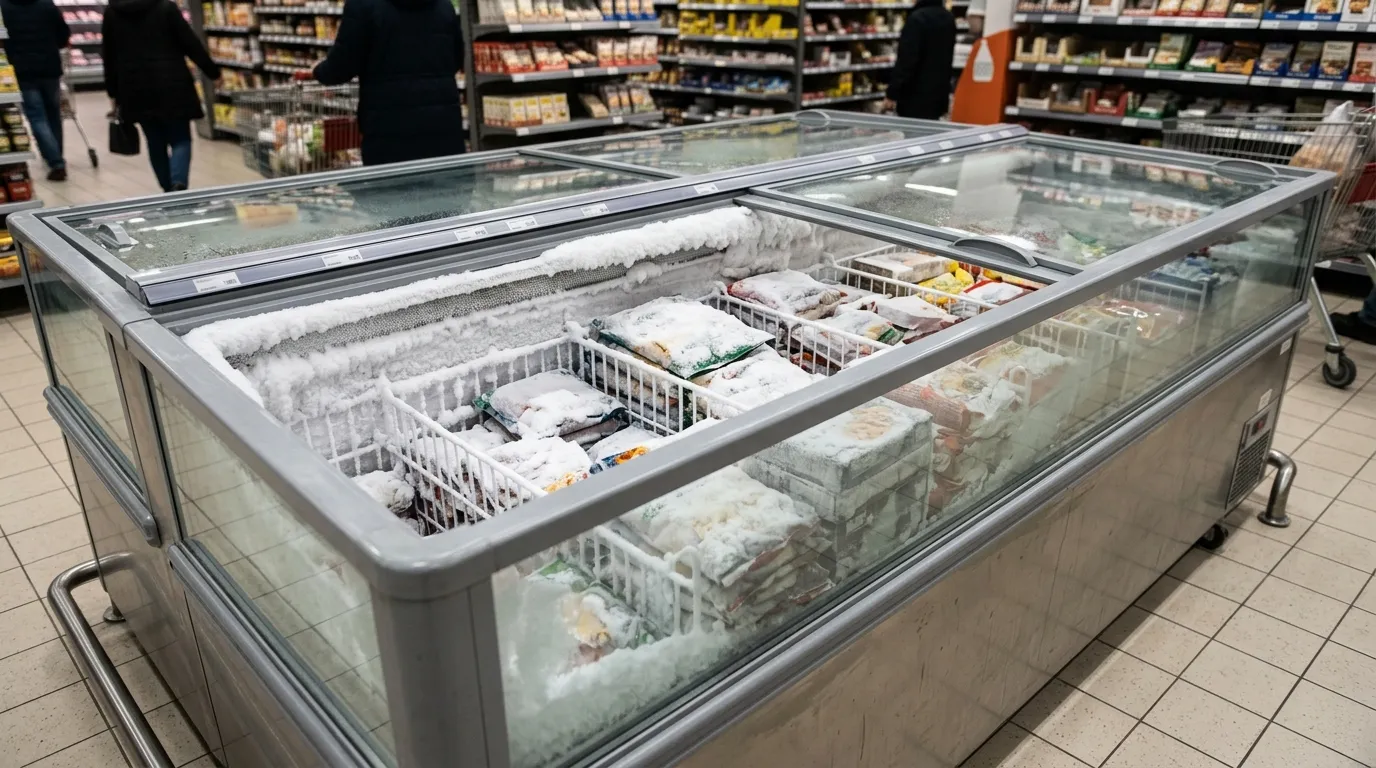
During refrigeration operation, moisture from the air freezes on the evaporator surface. As frost builds up , it acts as an insulating layer, reducing heat transfer efficiency and forcing the compressor to run longer to maintain the target temperature.
For distributors and commercial refrigeration buyers, selecting the correct defrost method should be based on:
- Refrigeration temperature range
- Product type
- Door opening frequency
- Ambient temperature conditions
- Cooling system design
- Energy efficiency requirements
- Maintenance capability of end users
A beverage cooler operating at +2°C to +8°C has very different defrost requirements compared with a frozen food cabinet operating at -18°C to -22°C.
The Impact of Defrost Method on Commercial Refrigeration Performance
Energy Efficiency
The defrost method directly influences energy consumption.
Electric defrost systems use heating elements to melt frost from the evaporator. Although they are simple and reliable, the heating elements consume additional electricity during each defrost cycle.
Hot gas defrost uses heat from the compressor discharge gas instead of electrical heaters. Because it recycles energy already generated during refrigeration operation, it can reduce defrost energy consumption, especially in larger systems or high-usage applications.
For commercial equipment operating continuously, even small efficiency improvements can significantly reduce annual operating costs.
Product Temperature Stability
During defrost, the evaporator temporarily stops cooling. If the defrost cycle is too long or poorly controlled, the cabinet temperature may rise and affect product quality.
This is especially important for:
- Frozen food freezers
- Ice cream freezers
- Meat storage cabinets
- High-frequency opening display cases
A well-designed defrost system should:
- Remove frost completely
- Minimize temperature fluctuations
- Allow rapid temperature recovery after defrost
Modern commercial refrigeration systems often combine defrost control with temperature sensors to prevent unnecessary heating.
Maintenance Frequency and Service Costs
An unsuitable defrost system can increase service requirements.
Common problems caused by poor defrost management include:
- Excessive evaporator icing
- Blocked airflow in dynamic cooling systems
- Water leakage from blocked drains
- Compressor overworking
- Reduced cooling performance
For distributors importing commercial refrigeration equipment, a reliable defrost design reduces after-sales complaints and improves customer satisfaction.
The 5 Main Defrost Methods in Commercial Refrigerators and Freezers
1. Manual Defrost (Cold Wall Units)
How It Works
Manual defrost is commonly used in static cooling refrigeration equipment where the evaporator is installed inside or around the cabinet wall.
When frost accumulates, the operator manually switches off the refrigeration system and allows the ice layer to melt naturally.
Typical applications include:
- Small chest freezers
- Compact refrigeration cabinets
- Small beverage coolers
- Budget commercial refrigeration units
Advantages
Lower initial cost
Manual defrost systems require fewer components, making the equipment simpler and more affordable.
Reliable operation
Without heaters, sensors, or additional control components, there are fewer potential failure points.
Lower energy consumption
During normal operation, there is no additional electricity consumption for defrost heating.
Disadvantages
Requires manual labor
Operators must regularly monitor frost buildup and perform defrosting procedures.
Temporary downtime
The cabinet may need to be emptied or taken out of service during defrosting.
Manufacturer Consideration
Manual defrost is suitable for applications with:
- Low door opening frequency
- Stable ambient conditions
- Lower refrigeration requirements
For busy retail environments, automatic defrost systems are generally preferred.
2. Off-Cycle (Air) Defrost
How It Works
Off-cycle defrost uses the natural temperature of the refrigerated space to melt frost.
The compressor stops periodically, while the evaporator temperature rises above freezing. No additional heating element is required.
This method is mainly suitable for medium-temperature refrigeration above 0°C.
Typical applications:
- Glass door beverage coolers
- Upright refrigerators
- Multideck display refrigerators
- Fresh food display cases
Advantages
Low Energy Consumption
Because no electric heater is used, off-cycle defrost is one of the most energy-efficient defrost methods for medium-temperature applications.
Simple Construction
The system requires fewer electrical components, reducing manufacturing cost and maintenance requirements.
Limitations
Off-cycle defrost is not suitable for low-temperature freezers because:
- Frost melts too slowly below freezing temperatures
- Ice accumulation may continue
- Cooling recovery becomes inefficient
For frozen food equipment operating at -18°C or below, electric or hot gas defrost is normally required.
3. Electric Defrost
How It Works
Electric defrost uses heating elements installed around the evaporator coil.
During the defrost cycle:
- Compressor operation stops
- Electric heaters activate
- Frost melts from the evaporator
- Melt water drains away
- Cooling operation resumes
Typical applications:
- Upright freezers
- Island freezers
- Ice cream freezers
- Low-temperature display cabinets
- Compact commercial freezer systems
Advantages
Simple System Design
Electric defrost is widely used because it is:
- Easy to manufacture
- Easy to control
- Easy to service
Reliable Frost Removal
Heating elements provide direct heat, allowing effective frost removal even at low temperatures.
Disadvantages
Higher Energy Consumption
Electric heaters consume additional power during each defrost cycle.
Temperature Rise During Defrost
If the cycle duration is excessive, cabinet temperature may increase.
This is why commercial freezer manufacturers use:
- Defrost timers
- Temperature sensors
- Defrost termination controls
to avoid unnecessary heating.
4. Hot Gas Defrost
How It Works
Hot gas defrost uses high-temperature refrigerant gas discharged from the compressor.
Instead of adding external heat, the system redirects compressor discharge gas through the evaporator to melt accumulated frost.
The basic process:
- Compressor produces hot discharge gas
- Valve system redirects gas flow
- Hot gas enters evaporator
- Frost melts from coil surface
- System returns to normal cooling operation
Advantages
Faster Defrost Cycle
Hot gas transfers heat more efficiently than electric heaters.
Typical defrost cycles can be significantly shorter than electric systems.
Lower Energy Consumption
Because it uses recovered refrigeration energy, hot gas defrost can improve system efficiency.
Better Temperature Recovery
Shorter defrost periods mean less temperature fluctuation.
Disadvantages
Higher System Complexity
Hot gas defrost requires additional components:
- Solenoid valves
- Refrigerant piping
- Control systems
This increases manufacturing complexity and initial cost.
More Suitable for Larger Systems
For small plug-in refrigeration cabinets, the additional complexity may not justify the benefit.
Typical Applications
Hot gas defrost is commonly used in:
- Supermarket refrigeration systems
- Large display cases
- Central refrigeration systems
- High-traffic commercial installations
5. Water Defrost (Less Common)
How It Works
Water defrost sprays water over the evaporator coil to remove ice buildup.
The water temperature melts frost quickly and drains away afterward.
Applications
Water defrost is mainly used in specialized industrial refrigeration systems.
It is less common in standard commercial refrigerators because it requires:
- Water supply
- Drainage systems
- Additional installation requirements
For typical commercial refrigeration equipment such as upright refrigerators, display cases, and freezers, electric or hot gas defrost remains more practical.
Electric Defrost vs. Hot Gas Defrost: Comparison
| Feature | Electric Defrost | Hot Gas Defrost |
|---|---|---|
| Heat Source | Electric heating elements | Compressor discharge gas |
| System Complexity | Simple | More complex |
| Initial Cost | Lower | Higher |
| Energy Consumption | Higher during defrost | Lower |
| Defrost Speed | Moderate | Faster |
| Temperature Recovery | Good | Excellent |
| Maintenance | Easier | Requires trained service |
| Best Application | Small and medium commercial units | Large systems and high-use applications |
How Defrost Cycles Are Controlled
Defrost Timers
Traditional commercial refrigeration equipment often uses timer-based control.
The system activates defrost according to preset intervals.
Typical settings:
- Start time
- Defrost temperature
- Defrost duration
- Number of cycles per day
Advantages:
- Simple
- Reliable
- Low cost
Disadvantages:
- Does not automatically adjust according to actual frost conditions
Adaptive Defrost Control (ADC)
Modern refrigeration systems may use adaptive defrost control.
Instead of running defrost at fixed intervals, the controller analyzes operating conditions such as:
- Compressor running time
- Evaporator temperature
- Door opening frequency
- Ambient temperature
The system performs defrost only when necessary.
Benefits:
- Lower energy consumption
- Less temperature fluctuation
- Longer compressor life
Temperature-Terminated Defrost
Temperature sensors can stop the defrost cycle when the evaporator reaches a preset temperature.
This prevents:
- Excessive heating
- Energy waste
- Product temperature increase
For commercial freezers, this control method provides better protection than fixed-time defrost alone.
Common Defrost Problems and Troubleshooting Considerations
Excessive Frost on Evaporator
Possible causes:
- Door gasket leakage
- High humidity environment
- Frequent door opening
- Incorrect defrost settings
- Insufficient insulation thickness
Solutions:
- Check door sealing
- Improve user operation
- Adjust defrost frequency
- Verify evaporator airflow
Water Leakage Inside Cabinet
Common causes:
- Blocked drain pipe
- Incorrect cabinet leveling
- Frozen drain outlet
Maintenance:
- Clean drain channels regularly
- Ensure proper drainage
- Check drain heater operation in freezer applications
Poor Cooling Performance After Defrost
Possible causes:
- Defrost cycle too long
- Incorrect sensor position
- Compressor recovery delay
- Poor airflow design
For commercial equipment, evaporator design and fan arrangement are equally important as the defrost method itself.
Defrost Specifications Buyers Should Check Before Purchasing
When evaluating commercial refrigeration equipment, distributors should review:
Defrost Type
Confirm whether the unit uses:
- Manual defrost
- Off-cycle defrost
- Electric defrost
- Hot gas defrost
Operating Temperature Range
Examples:
- Beverage cooler: +2°C to +8°C
- Meat and deli display: 0°C to +5°C
- Frozen food freezer: -18°C to -22°C
- Ice cream freezer: around -18°C to -25°C
The temperature range determines the appropriate defrost method.
Ambient Temperature Rating
Commercial refrigeration equipment should be selected according to installation environment.
Important factors:
- Room temperature
- Ventilation space
- Climate conditions
For hot regions, such as Middle East, Africa, and Southeast Asia, equipment should typically consider:
- Higher ambient temperature operation
- Larger condenser capacity
- Stronger compressor selection
Compressor Selection
The compressor must match:
- Refrigeration temperature
- Cabinet volume
- Ambient temperature
- Door opening frequency
For commercial applications, reliable compressor brands and correct capacity matching are essential for long-term performance.
Insulation Thickness
Good insulation reduces heat transfer and compressor workload.
Commercial refrigeration cabinets commonly use:
- 50–70 mm polyurethane foam insulation
Thicker insulation helps maintain temperature stability, especially in hot climates.
OEM Considerations for Distributors
For importers and wholesalers, defrost configuration can often be customized according to market requirements.
OEM options may include:
- Refrigerant selection (R290, R600a, R404A alternatives depending on application)
- Inverter compressor
- Compressor brand selection
- Defrost control programming
- Voltage and frequency customization
- Temperature controller selection
- Cabinet structure adjustment
For example:
A beverage distributor operating in a tropical market may prioritize:
- Dynamic cooling
- Automatic off-cycle defrost
- High-efficiency compressor
- Tropical ambient rating
while a frozen food distributor may require:
- Stronger compressor capacity
- Electric defrost
- Better insulation
- Faster temperature recovery
Final Recommendation for Commercial Refrigeration Buyers
There is no single “best” defrost method for all commercial refrigeration equipment.
The correct choice depends on the application:
| Application | Recommended Defrost Method |
|---|---|
| Beverage Cooler | Off-cycle defrost |
| Glass Door Chiller | Off-cycle or controlled defrost |
| Multideck Display Chiller | Off-cycle defrost |
| Upright Freezer | Electric defrost |
| Ice Cream Freezer | Electric or hot gas defrost |
| Large Supermarket System | Hot gas defrost |
When selecting commercial refrigeration equipment, buyers should evaluate the complete refrigeration system rather than only focusing on cabinet appearance or purchase price.
A properly matched combination of compressor capacity, cooling system, insulation design, and defrost method determines the actual operating efficiency, product safety, and service life of commercial refrigeration equipment.